
Every October, we turn our focus to some of the ocean’s most mesmerizing, intelligent, and mysterious residents: cephalopods. Cephalopods are a class of marine mollusks known for their distinct characteristics including a prominent head, arms or tentacles, and a mantle that houses their internal organs. This class includes squid, octopus, cuttlefish, and the nautilus. They are renowned for their intelligence, mobility, and complex behaviors like camouflage and problem-solving. These animals are soft-bodied, bilaterally symmetrical, and possess an astonishing suite of evolutionary adaptations. With the arrival of the cooler season and shifting ocean conditions, our dive sites off the coast of Dauin light up with cephalopod activity—and there’s no better time to dive in.
Whether you’re a marine biology enthusiast, a macro photographer, or simply in awe of nature’s marvels, Octopus October offers a truly unforgettable diving experience.
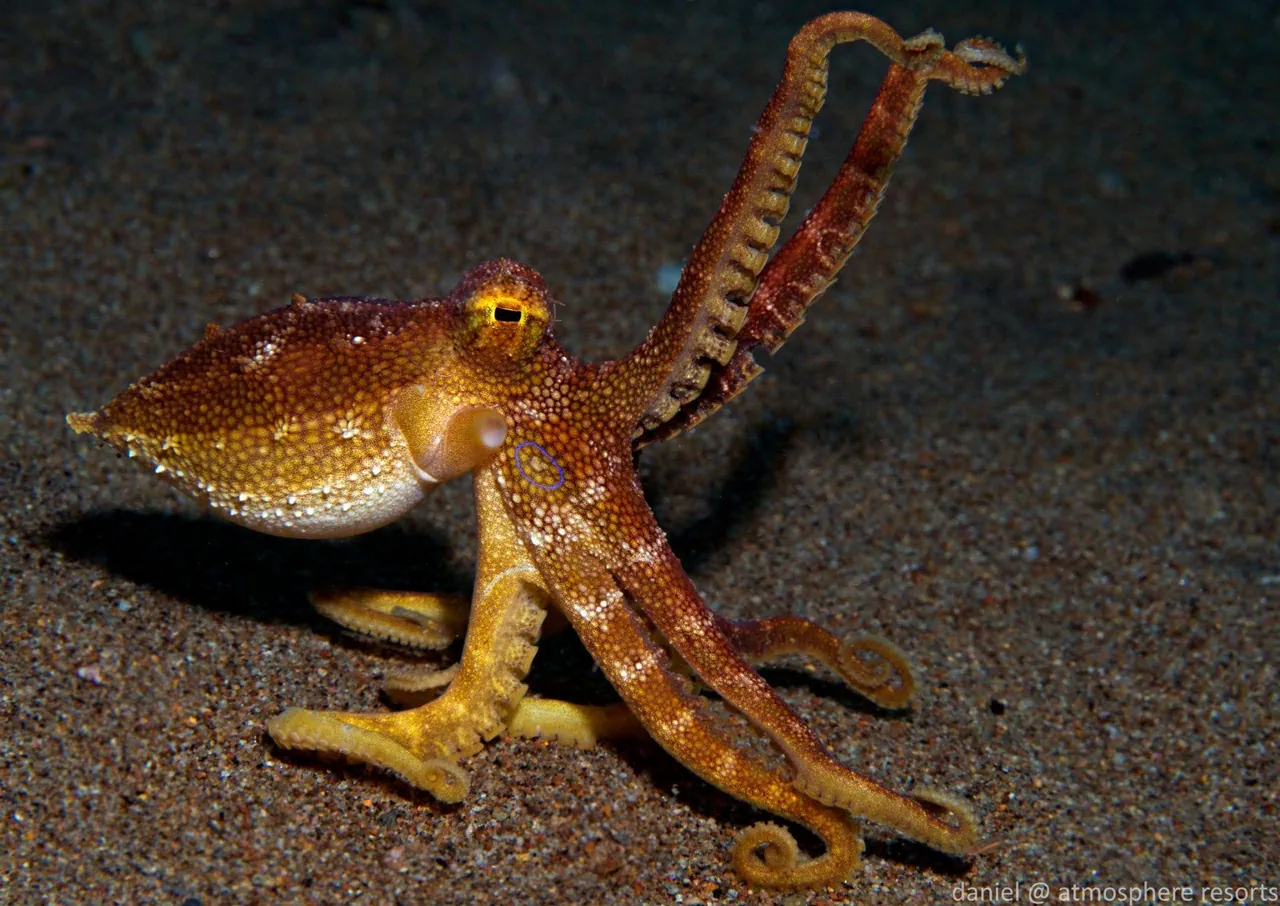
Mototi octopus showing off tentacles
Why October?
The waters of Dauin offer world-class muck diving all year round, but October marks a noticeable uptick in cephalopod sightings. Water temperatures dip slightly to a comfortable 27–28°C, and with fewer heavy rains than the earlier months, underwater visibility improves, especially on sunrise and dusk dives.
Many species of octopus are nocturnal or crepuscular, which means that they are most active at dawn and dusk. During this season, we see frequent activity and increased sightings as octopuses from species that are normally reclusive or harder to spot become more visible for mating.
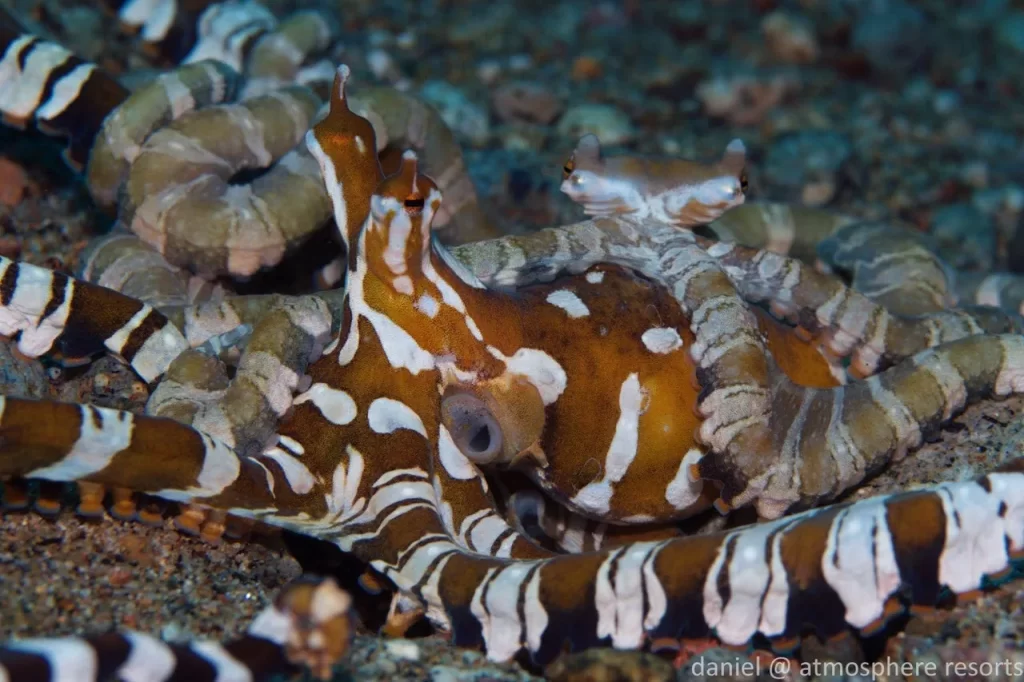
Wunderpus octopus mating
Here are some stars of Octopus October:
- Mimic Octopus (Thaumoctopus mimicus)
A true master of disguise, this species can impersonate over 15 different marine animals such as a lionfish, sea snakes, and flatfish. Watch it flatten its arms or change colors to confuse predators and divers alike.
- Wunderpus Octopus (Wunderpus photogenicus)
As its name suggests, this beautifully patterned octopus is a photographer’s dream. With delicate arms and symmetrical brown-and-white striping, it’s often confused with the mimic, but distinct once you learn the differences. Whereas the Mimic Octopus has a solid white border around the edges of its arms, this is absent in the W
- Blue-Ringed Octopus (Hapalochlaena lunulata)
Small, stunning, and famously venomous, this octopus is as captivating as it is dangerous. Its iridescent blue rings flash as a warning when threatened. These rings are called ocelli, which are eye-like markings.
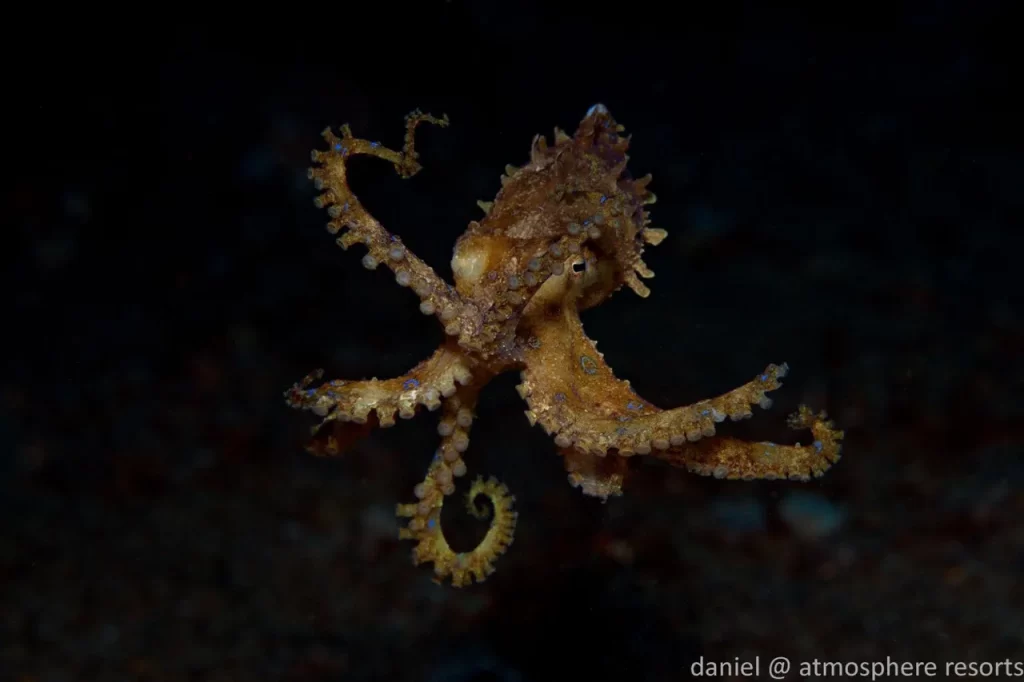
Blue ring octopus swimming using jet propulsion
- Mototi Octopus (Amphioctopus mototi)
This species is similarly venomous and also displays iridescent ocelli, but usually it only has one on each side of its body rather than dispersed all over the body like the Blue-Ringed Octopus.
- Reef Octopuses
These include the Coconut Octopus (Amphioctopus marginatus), Day Octopus (Octopus cyanea), and the Long Arm Octopus (Abdopus sp.). Common yet always a joy to observe, these curious creatures use rocks as tools, create dens from shells, and are often seen exploring with their intelligent, flexible arms.
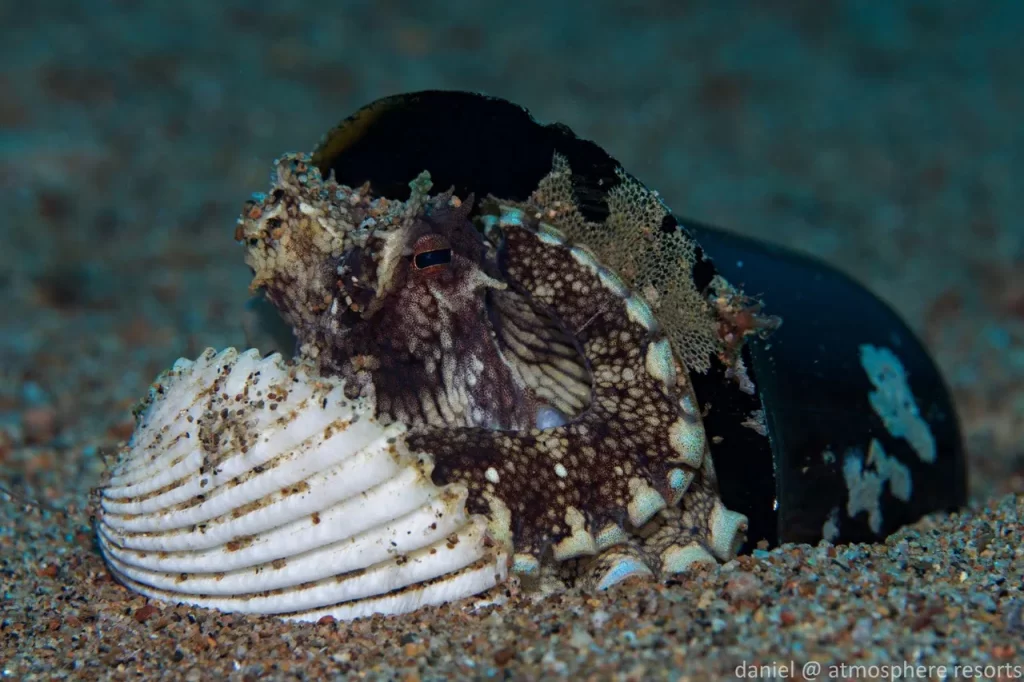
Coconut octopus using a shell to hide
Smart, Shy, and Shape-Shifting: Cephalopod Intelligence
Cephalopods are known as the “primates of the sea” for good reason. They have large brains relative to body size, excellent problem-solving abilities, and incredibly complex behaviors for invertebrates. They can:
- Camouflage in seconds, thanks to specialized skin cells called chromatophores, leucophores, and iridophores
- Use tools, such as coconut shells and rocks for defense or shelter
- Learn and remember, solving mazes and even recognizing individual divers over time
- Change texture and posture, mimicking their environment or other species
These animals challenge our understanding of intelligence, making encounters with them not just magical but profoundly humbling.
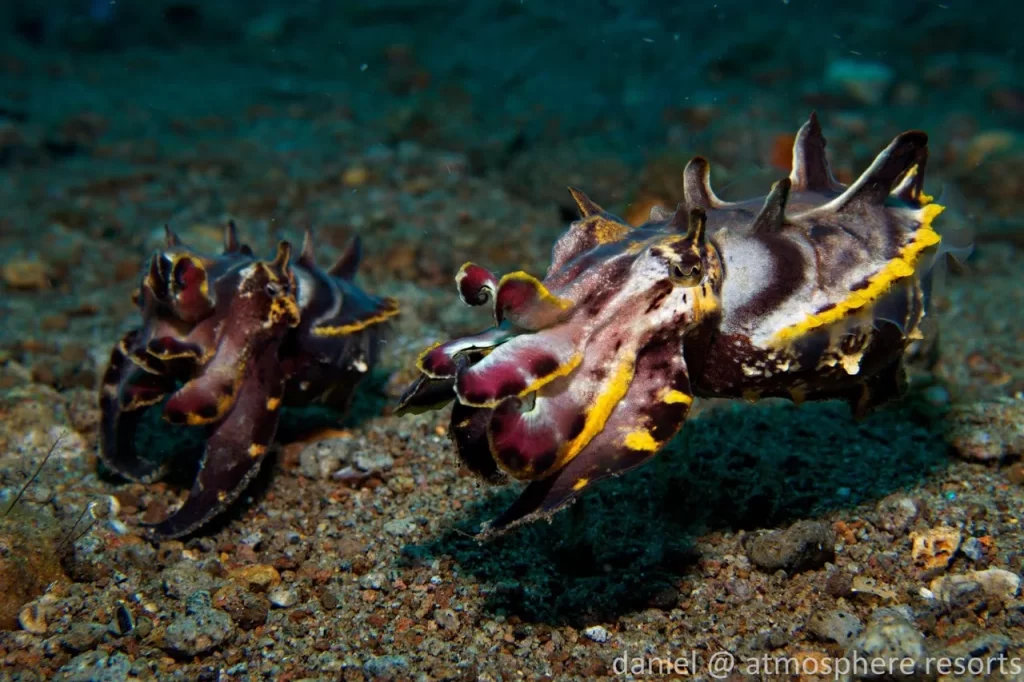
Two Flamboyant Cuttlefish preparing to mate
Plan Your Octopus October Dive Adventure with Atmosphere
Whether you’re aiming to tick rare species off your photography wishlist or just hoping to witness the strange beauty of a shape-shifting octopus in action, October is the time to do it.
At Atmosphere, we’re committed to marine conservation and responsible diving. Our dive guides are trained to observe and photograph cephalopods without disturbing them. We maintain a safe distance, avoid using excessive light, and educate our guests on how to appreciate these animals without stressing them out.
Join us this October and discover why these eight-armed wonders are some of the most beloved and brilliant creatures in the sea!