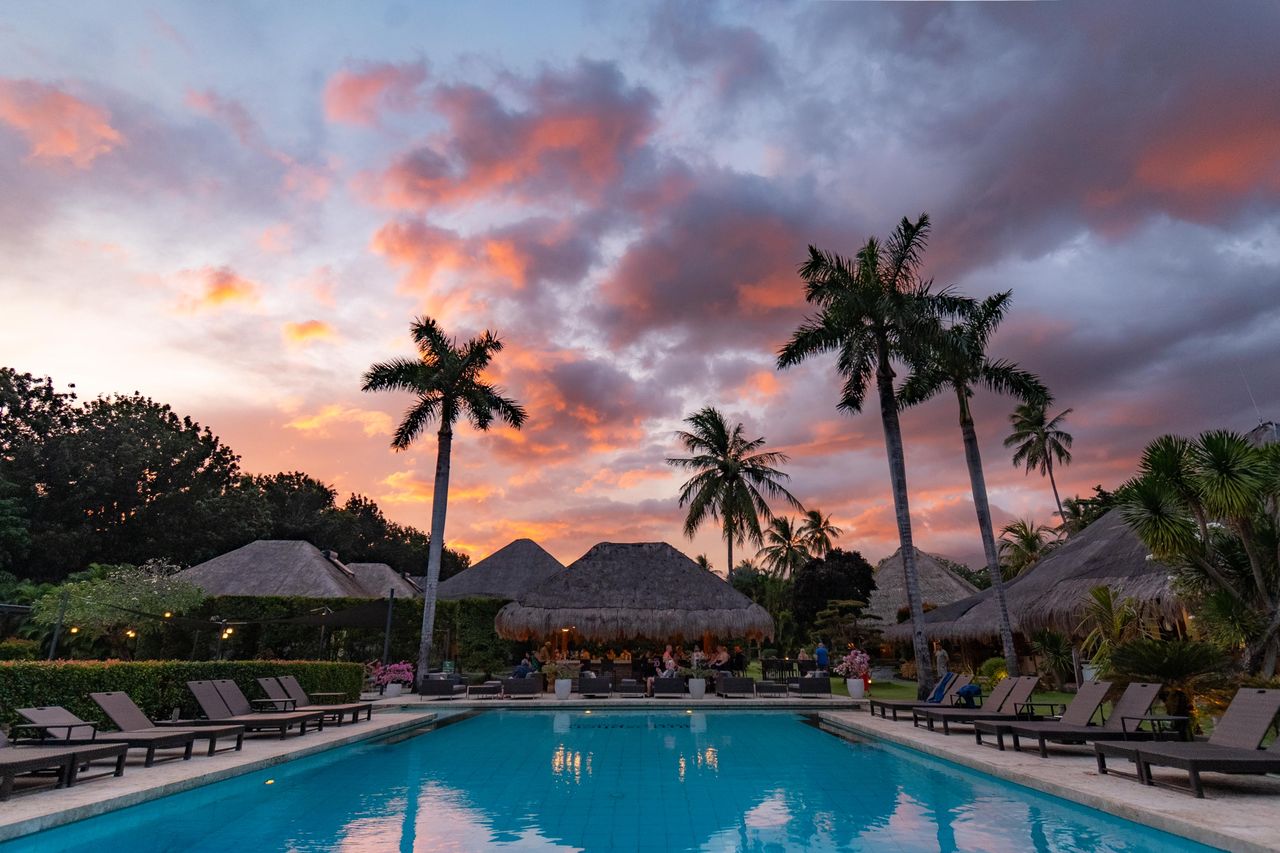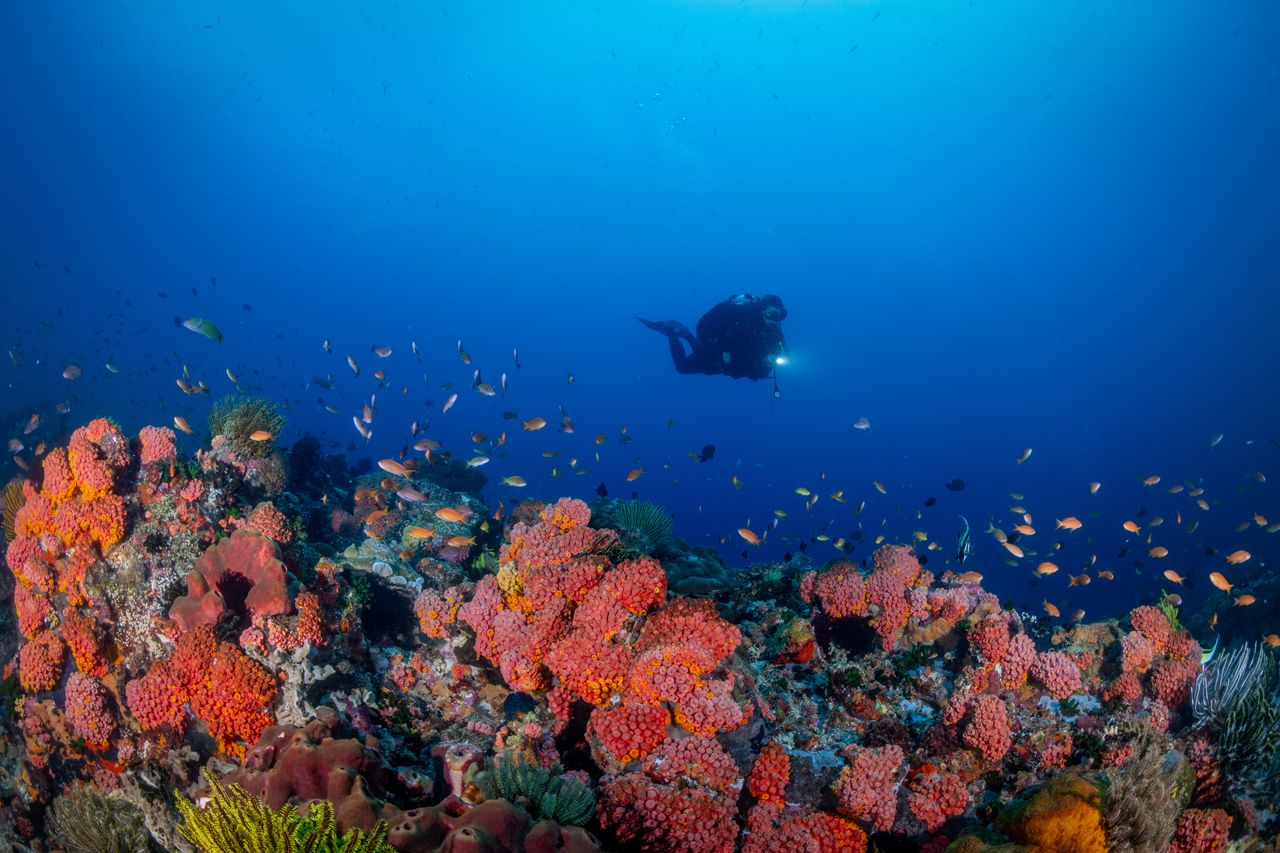
As the spookiest season of the year approaches, us marine life enthusiasts at Atmosphere start hunting for nature’s weirdest creations. While most people associate Halloween with haunted houses and dark woods, macro divers know that the real spooky species are lurking right beneath the surface on the volcanic sand slopes of Dauin, Negros Oriental. Dauin’s dark muck sites are world-famous for their incredible biodiversity, and these black sand beds reveal a haunting cast of eerie, bizarre, and hauntingly adapted marine life. If you are ready to explore the darker, stranger side of marine biology this Halloween season, here are five creepy critters you need to add to your Dauin spotters list.
-
Skeleton Shrimp
Do not let their tiny size fool you! Skeleton shrimp (Caprellidae) look like alien insect skeletons or micro-zombies straight out of a horror film. These tiny, semi-translucent amphipods have thread-like bodies and hooked claws that give them a praying-mantis-like posture. They cling to hydroids, sponges, and mooring lines in dense, twitching masses, swaying eerily in the current while grabbing micro-prey out of the water column. Watching dozens of them move in unison under a macro lens feels like observing a microscopic ghost army. You can find them cling-mounted on hydroids, sponges, and marine ropes along our slopes.
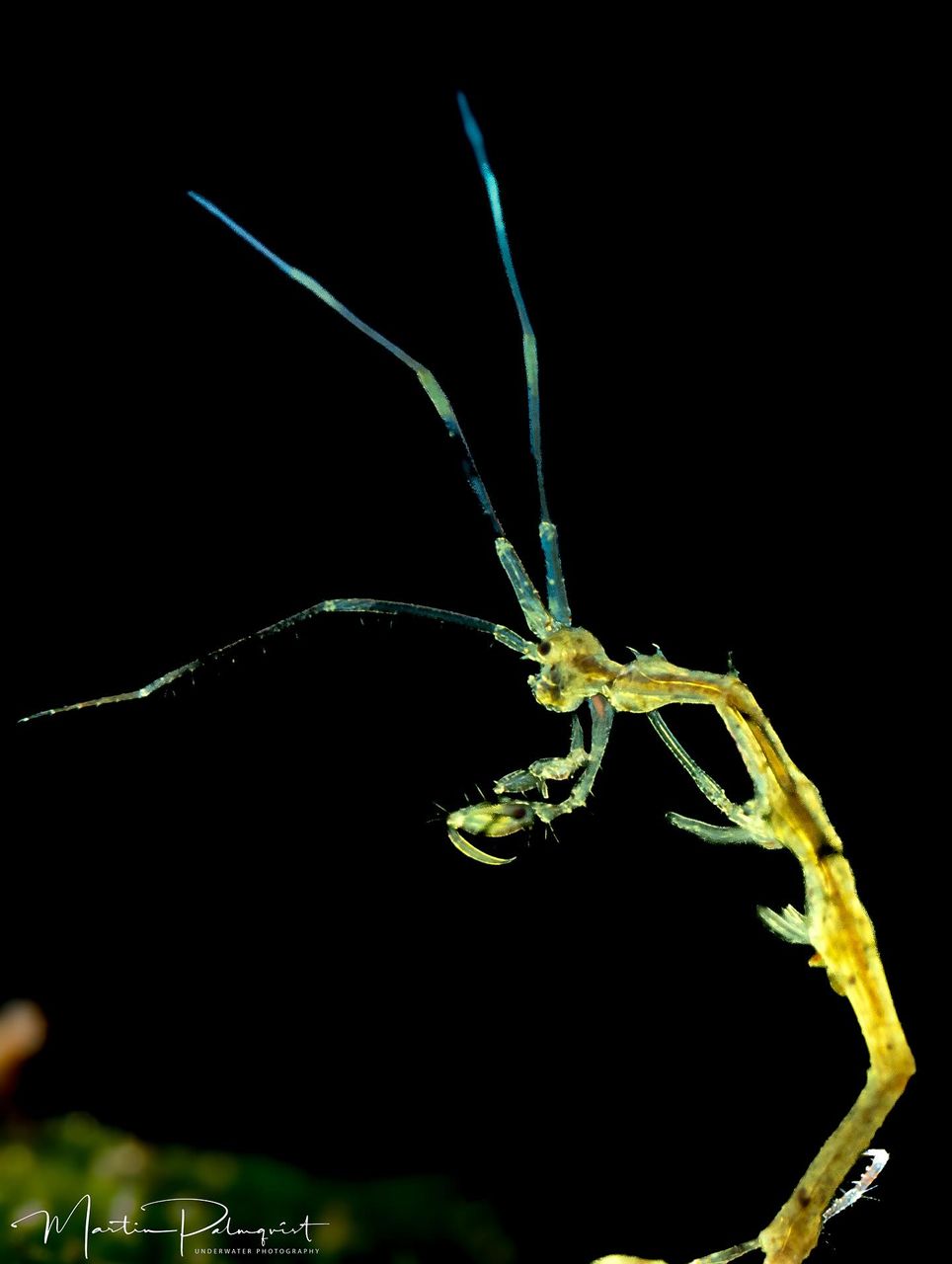
Photo by Martin Palmqvist @karlmartinniklas
-
The Stargazer
If you have ever felt like you were being watched while gliding over the dark sand, you might have been right. The Stargazer (Uranoscopidae) is the ultimate ambush predator of the muck. It buries its entire body beneath the volcanic silt, leaving only its flat, upward-facing eyes and a grimacing mouth filled with needle-sharp teeth exposed. To lure unsuspecting prey, it uses a worm-like lure attached to the floor of its mouth. When a small fish approaches the lure, the Stargazer strikes in a fraction of a second with explosive force, sometimes even delivering a mild electric shock from organs located behind its eyes. You can spot them resting on flat, silty sand beds at sites like San Miguel and Dauin Poblacion, making a night dive the absolute best choice since that is when they actively hunt and lie in wait.
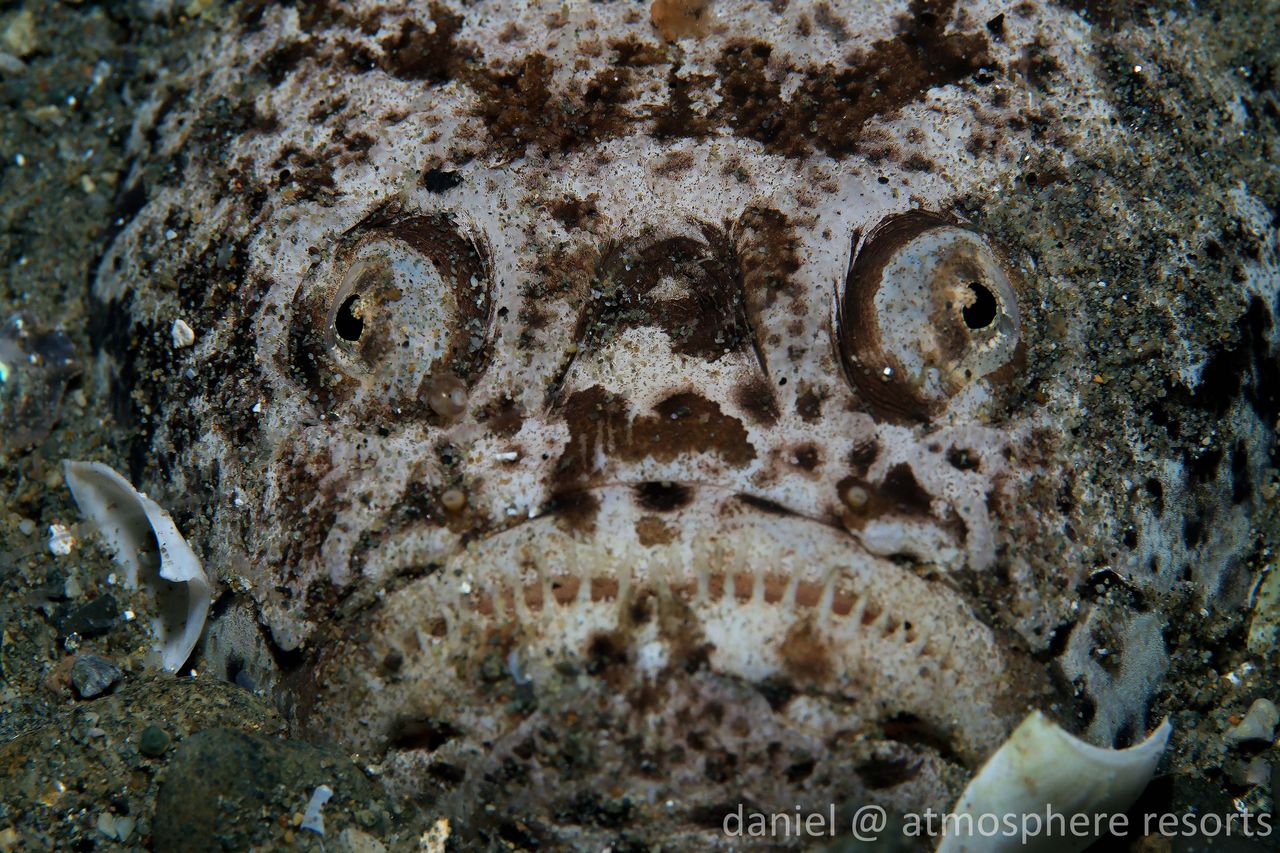
Photo by Daniel Geary @drfrogfish
-
The Bobbit Worm
Named after a notorious tabloid story, the Bobbit worm (Eunice aphroditoides) is easily one of the most terrifying ambush hunters in the marine world. Living completely subterranean, this bristle worm can grow up to 3 meters long under the sediment, though only a few inches of its head peek above the sand. Armed with five sensitive antennae and massive, scythe-like retractable jaws, it sits in silence until a fish touches its sensory bristles. In a flash, its spring-loaded jaws snap shut, cutting prey in half or dragging it live into the dark burrow below. They inhabit deep, fine volcanic sand flats across Dauin’s sites, and your best chance of an encounter is during a night muck dive.
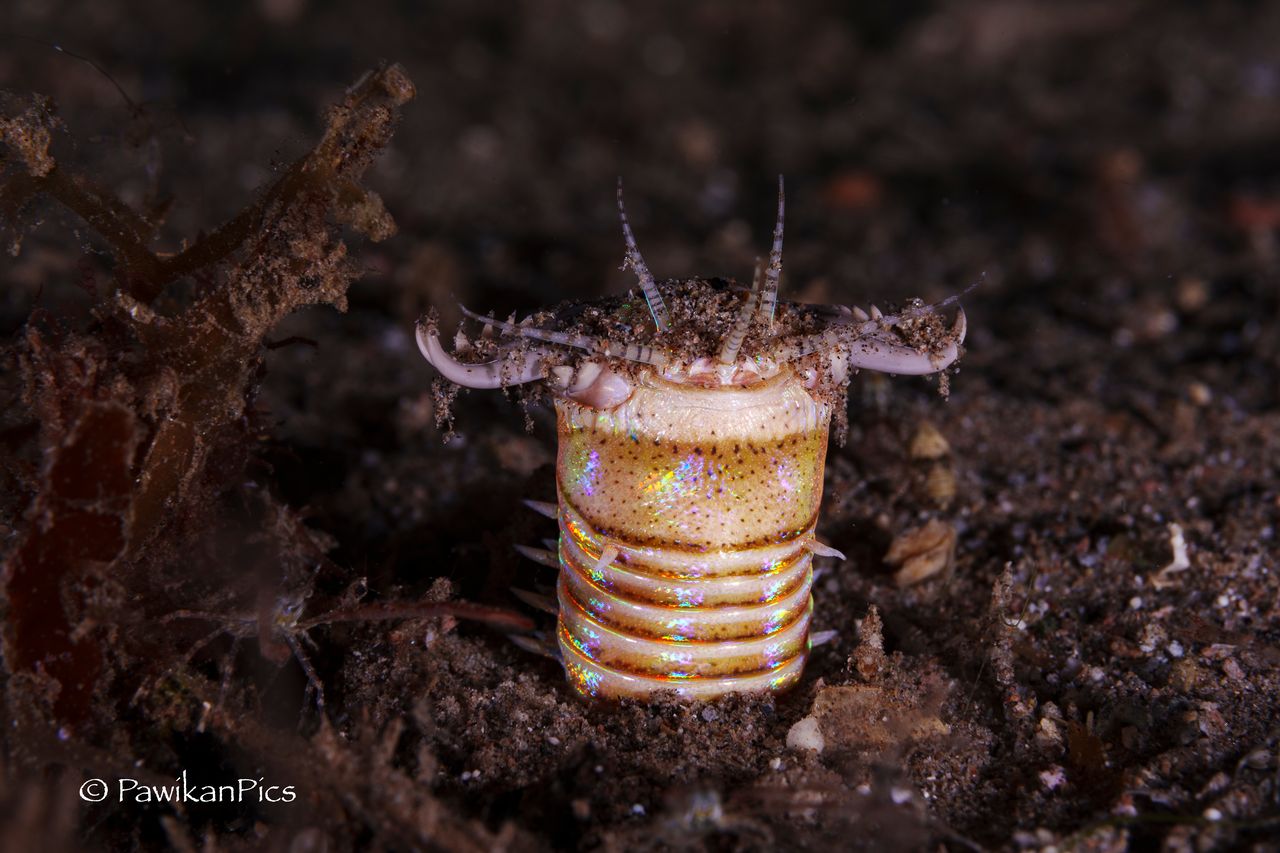
Photo by Pamela Abela @pawikanpics
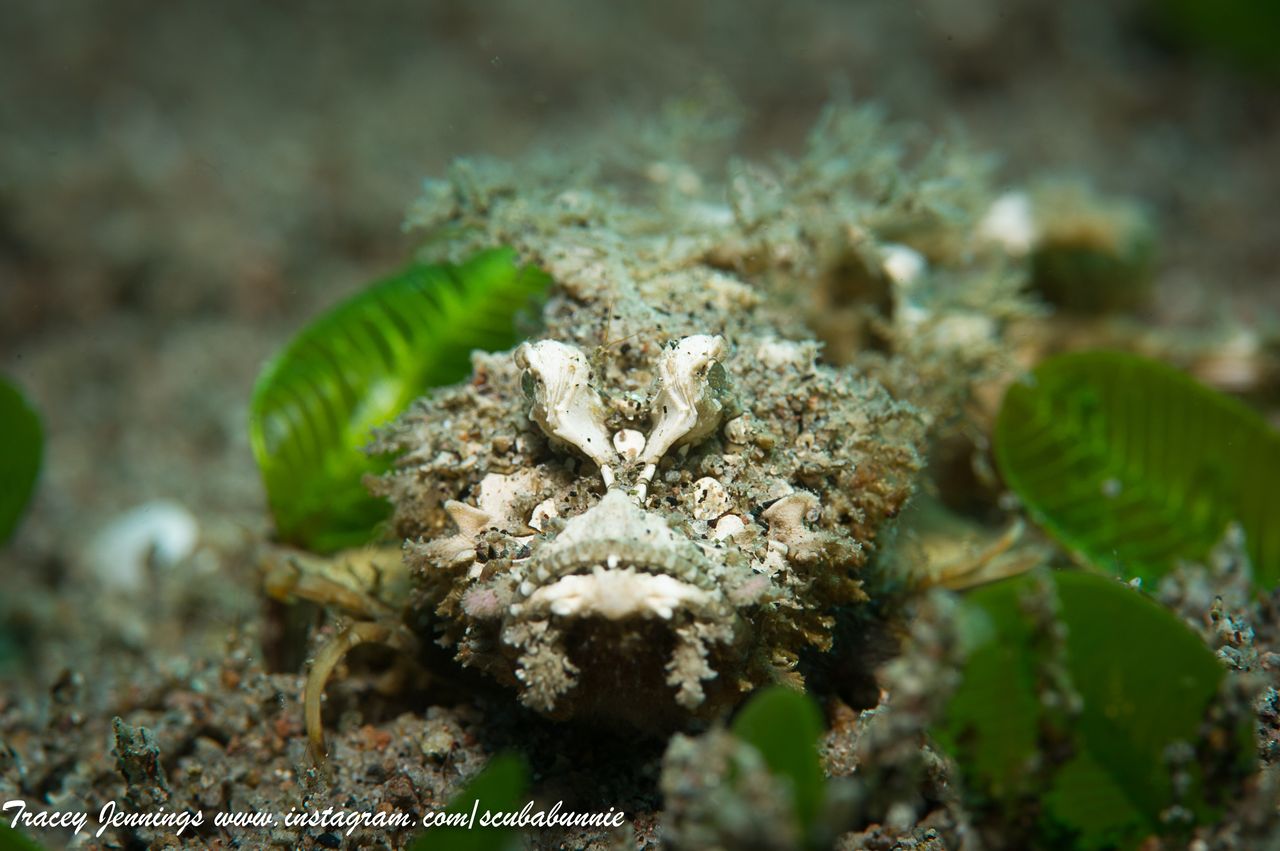
Photo by Tracey Jennings @scubabunnie
-
The Spiny Devilfish
With a mottled, decaying appearance and venomous spines, the spiny devilfish looks like a creature that crawled right out of a haunted swamp. This master of camouflage blends seamlessly into coral rubble and algae-covered sand, looking like a rotting piece of debris. What makes it extra eerie are its pectoral fins, which feature detached, claw-like rays that the fish uses to literally walk along the seafloor like a subterranean spider. If stepped on or threatened, its dorsal spines can deliver an agonizing, toxic sting. You can look out for them along rubble-strewn slopes and patchy sand habitats.
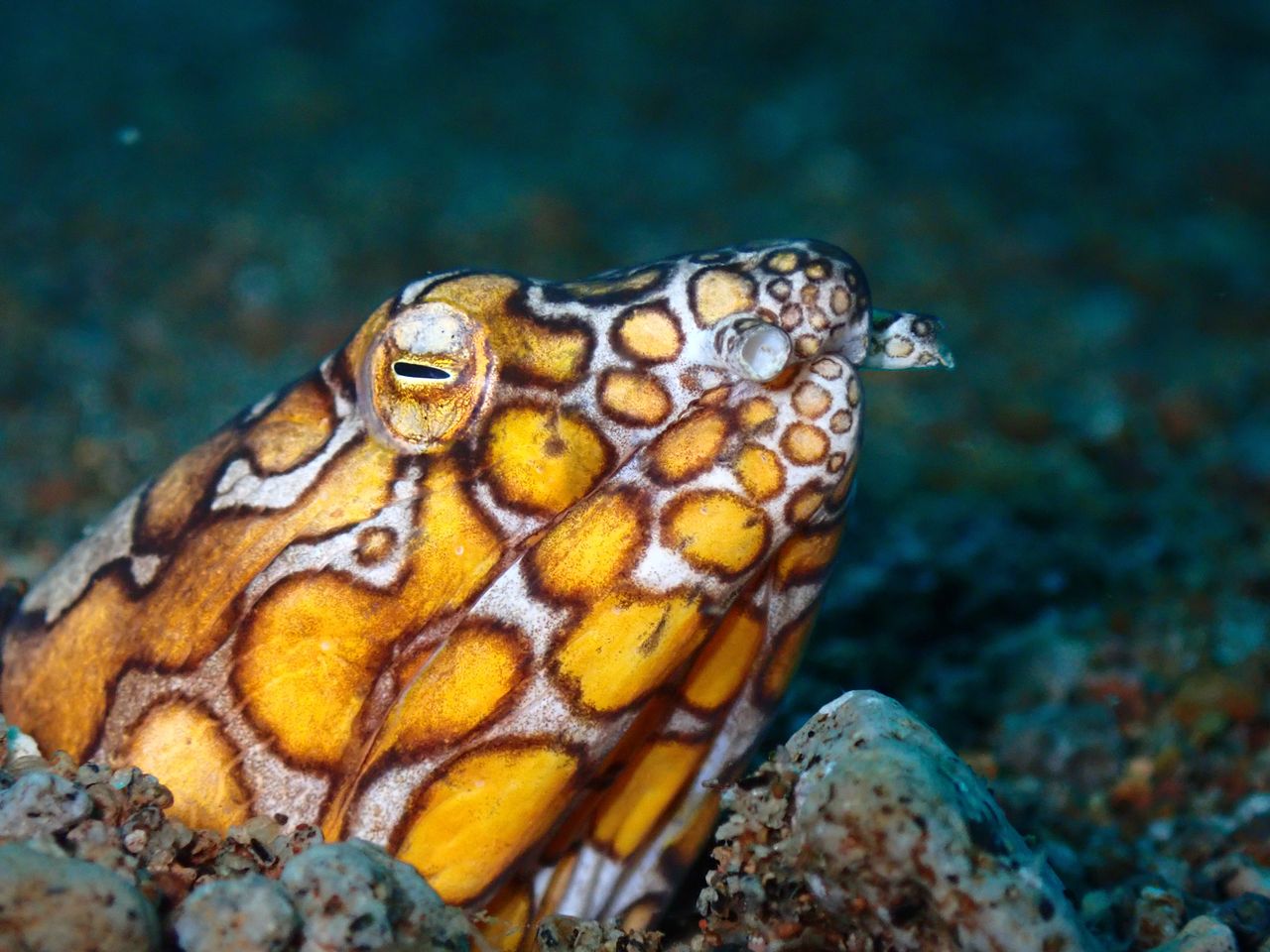
Photo by Tamara Silverstone @underwater.tam
-
The Snake Eel
At first glance, spotting a Snake eel (Ophichthidae) sticking out of the seabed looks like seeing a pale ghost rising from a grave. Unlike true sea snakes, snake eels are fish that specialize in burrowing tail-first into the substrate, leaving only their pale, pointed snout and unblinking eyes resting on the sand surface. Resting motionless in the sediment, they wait for small crustaceans or unsuspecting fish to swim within striking distance before lunging out of their sandy lair. They are scattered across open, sandy flats along coastal Dauin, and can easily be spotted on either a day or night muck dive.
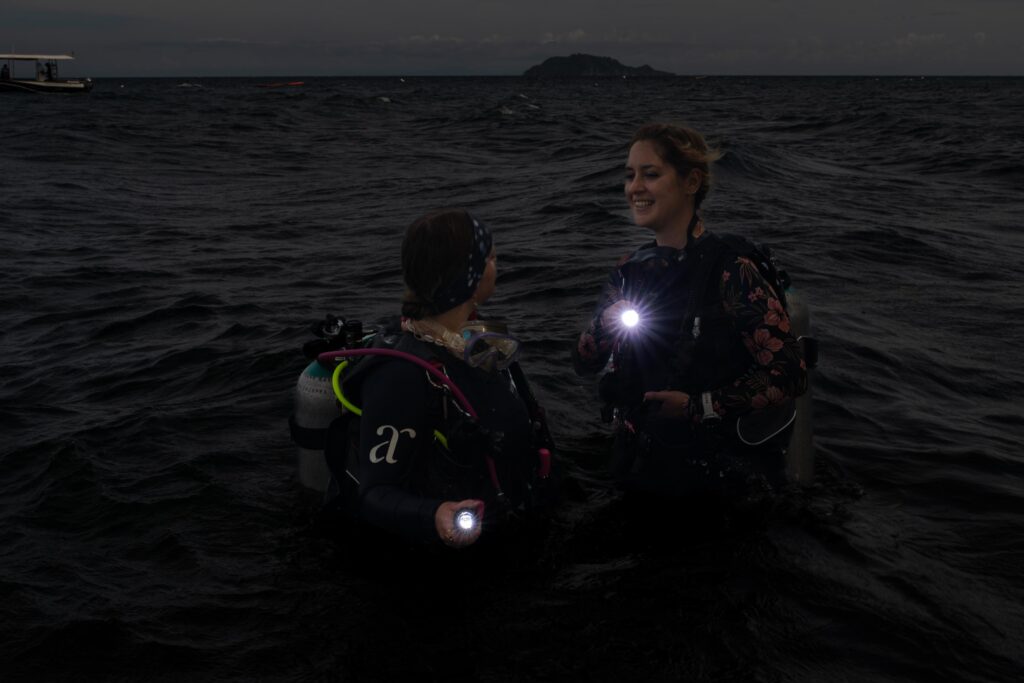
Book a night dive with us, contact dive@atmosphereresorts.com
Uncover the Magic of Dauin’s Muck with Atmosphere Resorts
Whether you are a seasoned underwater photographer hunting for rare, eerie subjects or a curious diver looking to experience nature’s most unique evolutionary adaptations, Dauin’s muck sites offer a front-row seat to the ocean’s greatest mysteries. When you dive with Atmosphere Resorts & Spa, you benefit from the expert eyes of our local PADI dive guides, who know every sandy patch, rubble zone, and hidden lair along our coastline. For macro and super-macro photographers, our world-class camera room facilities, equipped with individual workspace stations, air hoses, rinse tanks, and charging points, ensure your gear is prepped to capture every haunting detail of these incredible critters. Ready to trade standard reef dives for a creepy critter adventure this season? Book your stay and diving package today, and let our team guide you through the weird wonders of Dauin’s underwater world!