
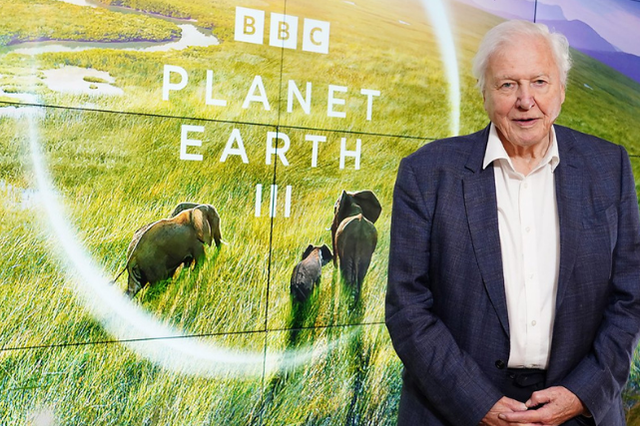
Sir David Attenborough at the launch of Planet Earth III, continuing his decades-long legacy of bringing the natural world closer to audiences around the globe.
In the world of ocean storytelling, few voices are as iconic as Sir David Attenborough. For generations, his narration has brought the wonders of the natural world into our homes inspiring curiosity, awe, and a deeper appreciation for life beneath the surface.
So when we listened to Sir Attenborough’s voice narrating a tiny, yellow, elusive creature found right here on our Atmosphere House Reef in Dauin, it was nothing short of surreal.
On May 8, 2026, the world celebrates a monumental milestone: Sir David Attenborough’s 100th birthday. With a career spanning over seven decades, Attenborough hasn’t just filmed the natural world, he has defined how we see it.
While he spent years introducing us to the wonders of the wild, his recent work has taken on a more urgent, visionary tone. Today, he remains a vital voice for the planet, shifting the focus toward scientific innovation, actionable solutions, and a stubborn sense of hope for our collective future.
But what does this have to do with Atmosphere Resorts & Spa, a yellow frogfish and Dauin? It all started with an email from the BBC…
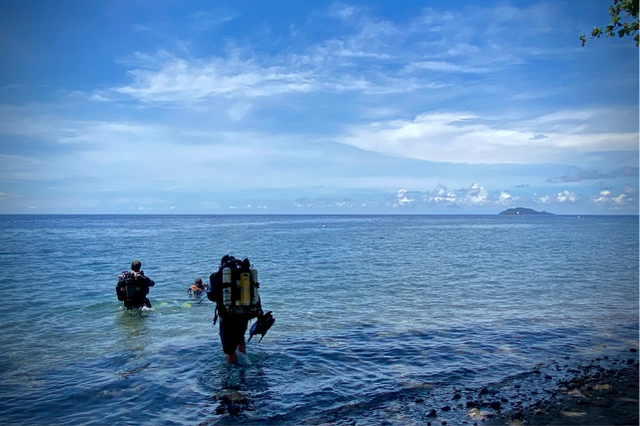
Members of the BBC filming team enter our house reef during the filming of Planet Earth III, where the Dauin’s unique marine life took center stage.
A Call from the BBC
It all began in 2021, when the BBC reached out to Atmosphere’s previous in-house marine biologist Daniel “Dr Frogfish” Geary with a simple but exciting question: Is Dauin really the best place in the world to find and film frogfish?
The answer was a confident yes! And when asked where it would be best to film it, Daniel did not hesitate in suggesting the Atmosphere house reef.
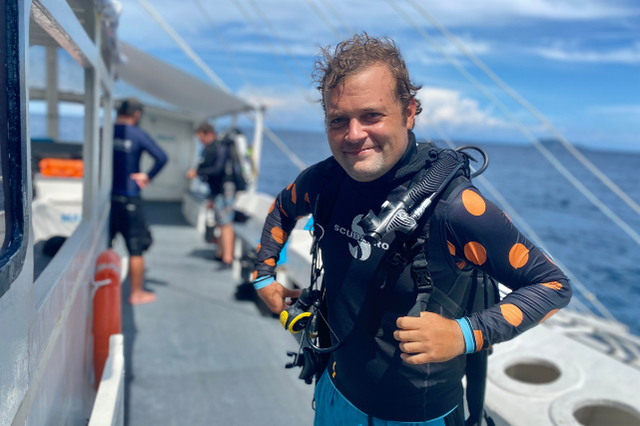
Daniel “Dr Frogfish” Geary aboard Atmosphere’s dive boat Victoria in Dauin, Negros Oriental. Daniel’s expertise in frogfish behavior and identification helped guide the BBC team during preparations for filming Planet Earth III.
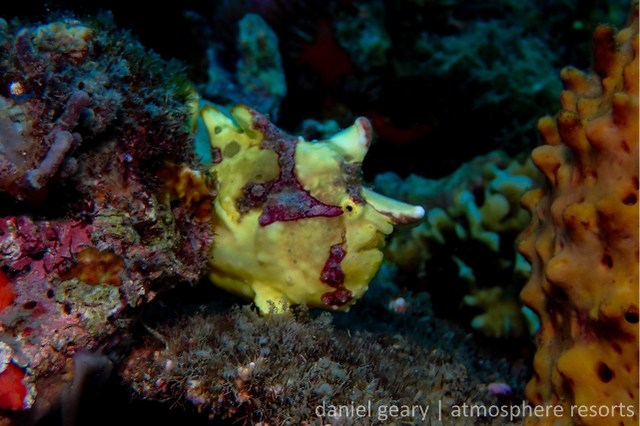
With insights from Daniel, the BBC team decided to visit and film a very specific species, a warty frogfish (Antennarius maculatus) that has a lure that mimics a shrimp. This lure is a modified dorsal spine, known as an illicium, that is topped with a fleshy and bait-like esca to attract prey for the frogfish, which are ambush predators.
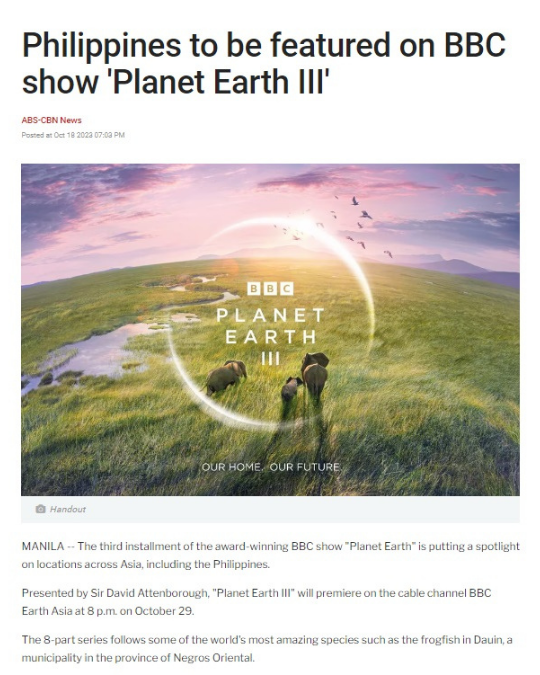
News coverage announcing the Philippines’ inclusion in Planet Earth III, featuring the extraordinary marine biodiversity of Negros Oriental and Dauin.
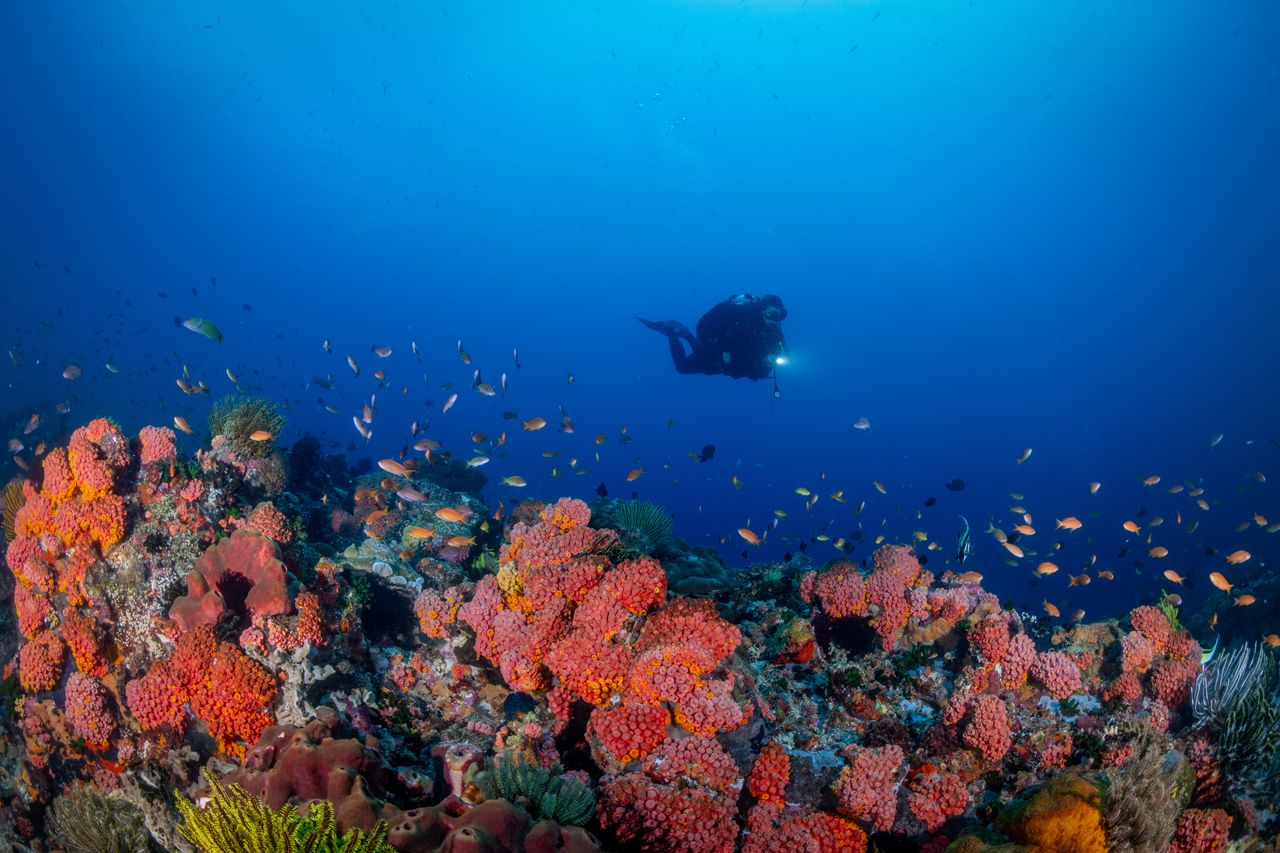
It was nop surprise that the team behind Planet Earth III identified Dauin and Atmosphere as the ideal filming location. Known for its world-class muck diving and unique mix of sand and coral habitats, the area offers the perfect conditions for frogfish to thrive. And with a protected house reef abundant with frogfish just in front of the resort, plans could begin to form.
Working closely with the Atmosphere dive team, the BBC crew began preparations for the shoot. The production team travelling to Dauin to do the filming included cameramen Hugh Miller and Sam Lewis, led by producer Yolande Bosiger.
What followed was weeks of careful preparation, and the kind of patience wildlife filmmaking demands.
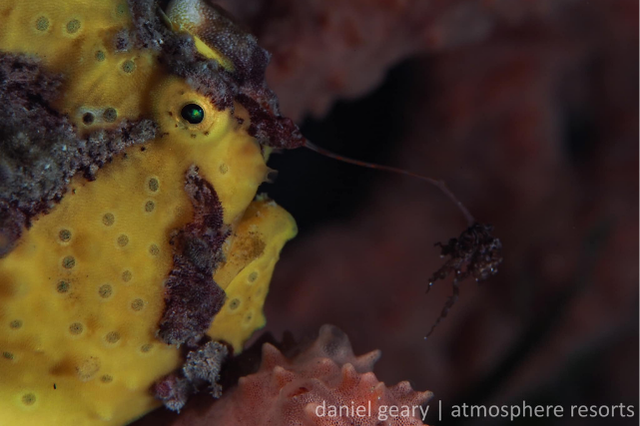
Here is our hero! This brightly colored frogfish, using its lure to attract unsuspecting prey, is the very individual that a few weeks later was filmned by the BBC and became the star of episode 2. Photo by Daniel Geary.
Finding the Star of the Show
Frogfish may be masters of camouflage, but they are not known for their speed, which worked in our favor. Once our team located the perfect subject on the house reef, the real work began.
Every day, we monitored the frogfish closely, hoping that it would stay safe, healthy, and within range for filming. It became a quiet daily ritual: checking in, observing, and hoping it wouldn’t wander too far.
When the BBC crew finally arrived, everything was in place. What followed required extraordinary patience: the team spent over 150 hours underwater across the span of a month, waiting for the precise moment the frogfish would become hungry and begin to hunt.
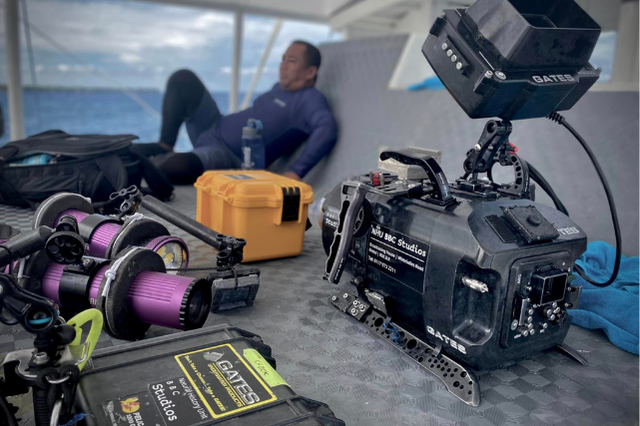
Specialized BBC Studio underwater video equipment prepared aboard our dive boat Victoria during the filming of Planet Earth III in Dauin, Negros Oriental.
Lights, Camera… Frogfish!
Capturing the frogfish’s feeding behavior was no small task. Predicting when it would strike is nearly impossible, and the action itself happens in less than 4 milliseconds, making it one of the fastest predatory movements in the animal kingdom. To capture this, the crew relied on high-speed cameras capable of slowing footage down up to 30 times, and even recording moments before the trigger is pressed, ensuring nothing was missed.
To meet this challenge, the crew used closed-circuit rebreather systems (CCR’s or “rebreathers”), allowing divers to remain underwater for up to four hours at a time without releasing bubbles that could disturb the frogfish and the prey’s natural behavior.
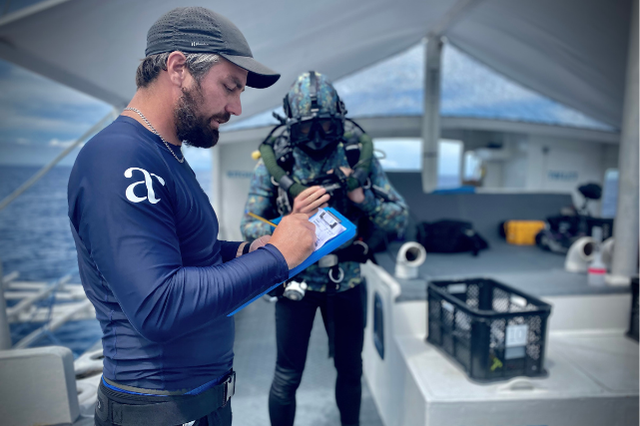
Gabe Rioux, Technical Instructor Trainer at Atmosphere Resorts & Spa, coordinating dive operations and surface support during the filming of Planet Earth III in Dauin.
Behind the scenes, this was a highly technical production operating to strict European standards. The BBC team were mainly diving with rEvo and AP Inspiration CCR’s, along with full-face masks with direct communication to the surface. This allowed constant coordination between divers and the team on the boat throughout each dive. Dedicated surface support, safety divers, and precise in-water protocols ensured operations could be carried out safely and efficiently.
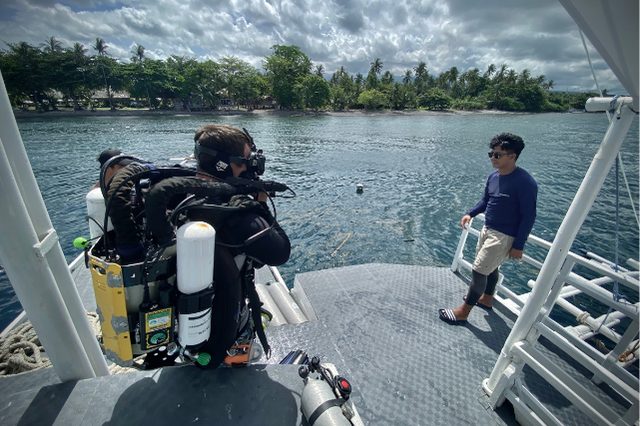
A BBC videographer prepares for an underwater frogfish-filming session on the Atmosphere house reef, from our dive boat Victoria.
Supporting a project of this scale required more than just access to a dive site. Atmosphere provided dedicated operational space, surface logistics, and dive support, enabling the team to focus entirely on capturing the shot. The result was a seamless collaboration, with the BBC crew highly satisfied with both the facilities and the level of support throughout the project.
The result was a breathtaking sequence featured in Episode 2: “Oceans” of Planet Earth III, which premiered on October 29, 2023, on BBC Earth Asia.
From over a petabyte of footage filmed across five years, this short but powerful moment made it into the final cut:
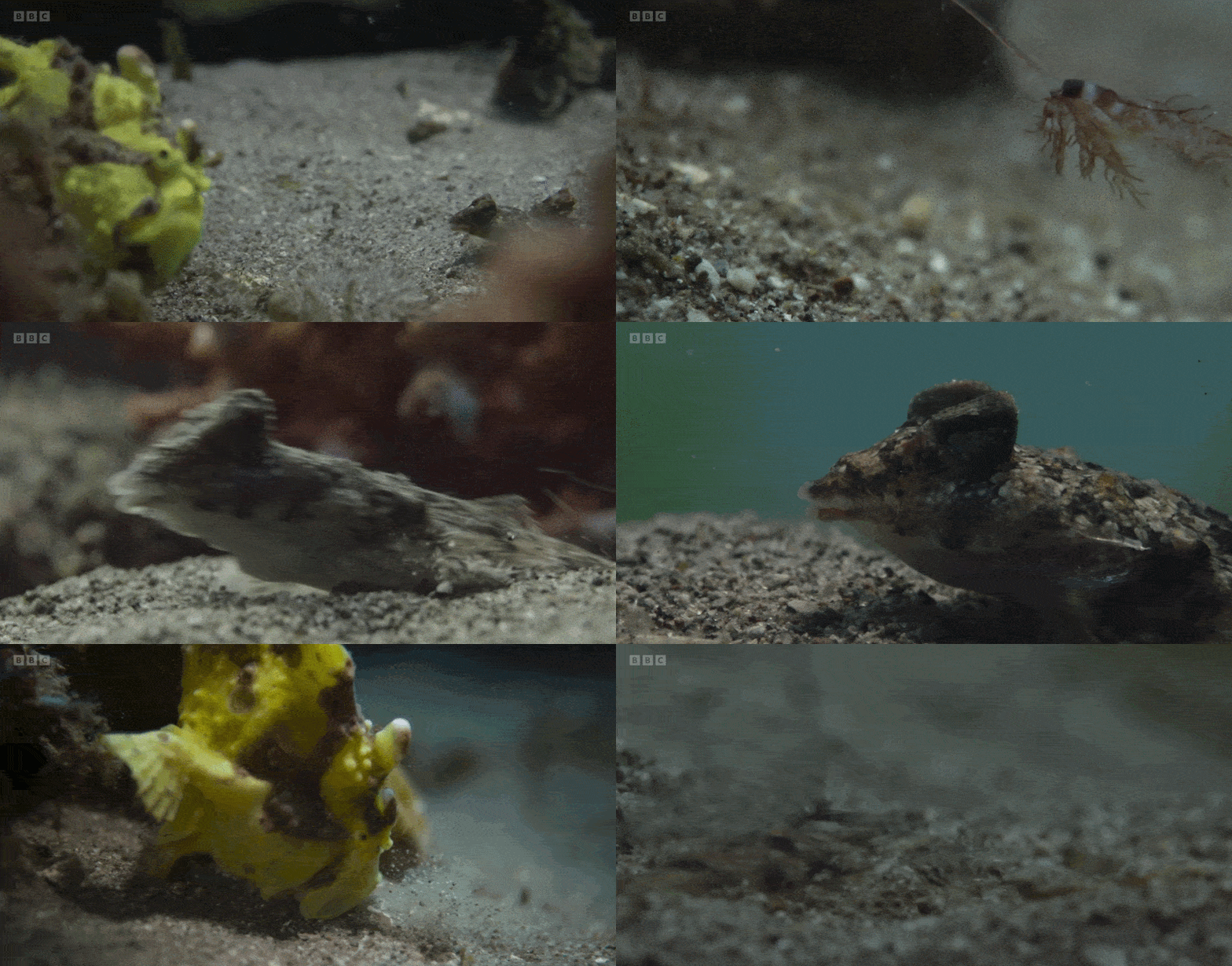
And then came the moment.
Hearing Sir David Attenborough narrate a frogfish, found just steps from our resort was something we’ll never forget. It was a proud, humbling, and truly surreal experience for the entire team.
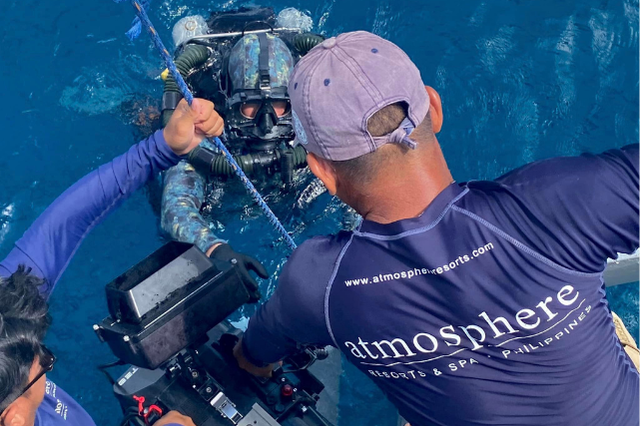
Atmosphere Resorts & Spa crew members assist the BBC dive team with their equipment during underwater filming operations in Dauin for Planet Earth III.
Why Dauin Is So Special
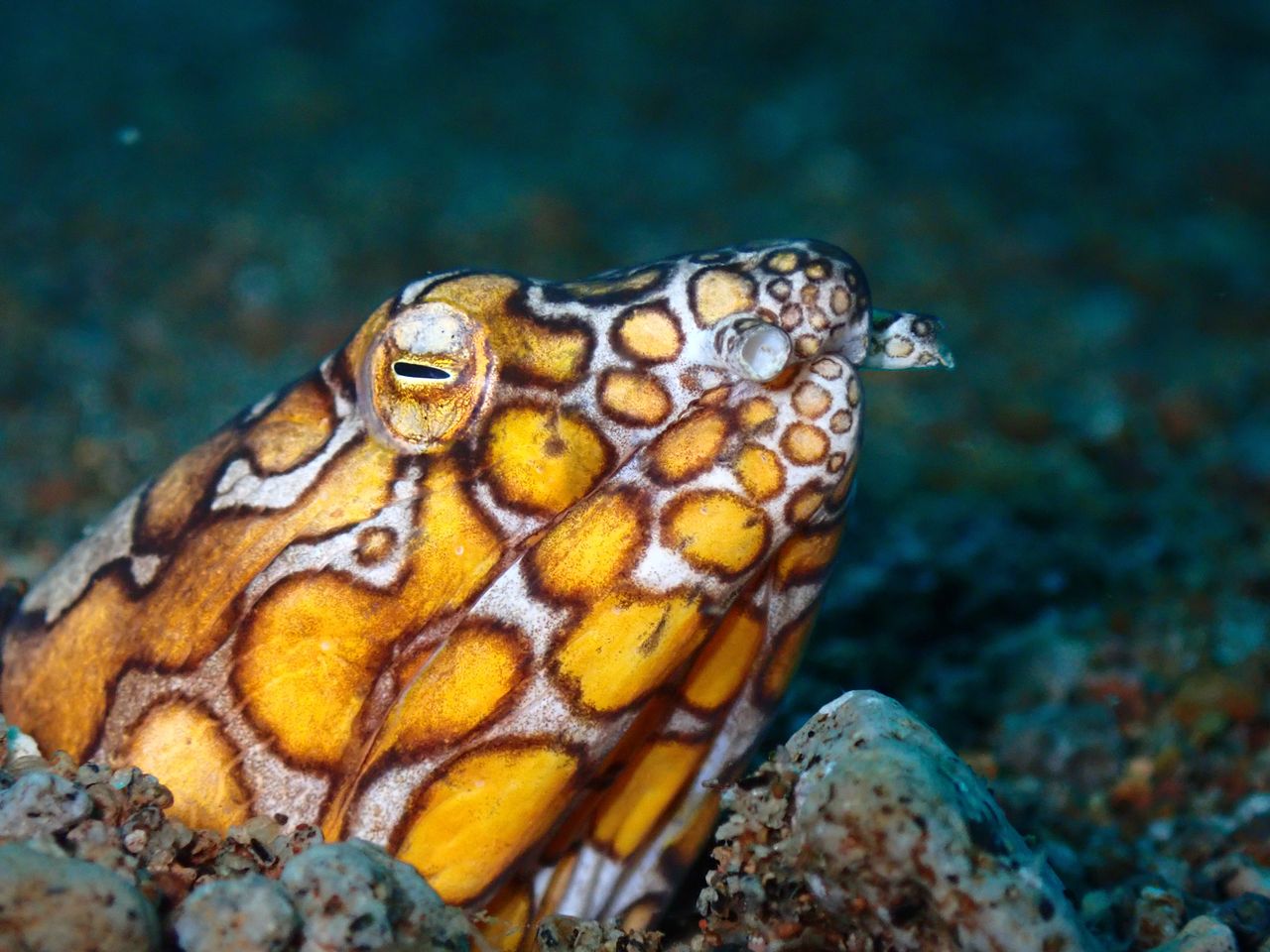
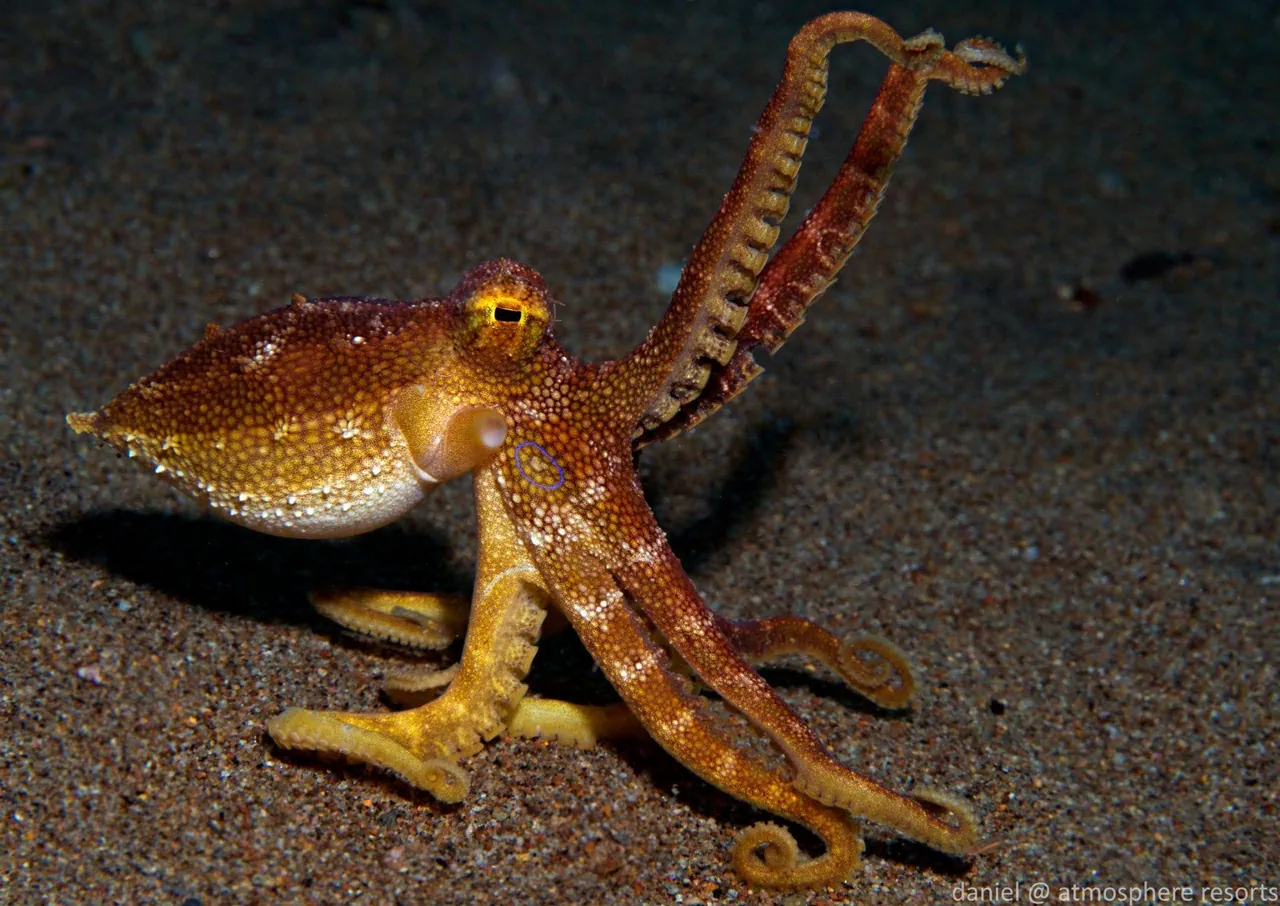
Dauin is often called the “muck diving capital of the world,” and moments like this show why. Beneath its calm, waters lies an extraordinary world of rare and fascinating marine life, from flamboyant cuttlefish to ghost pipefish, and of course, frogfish.
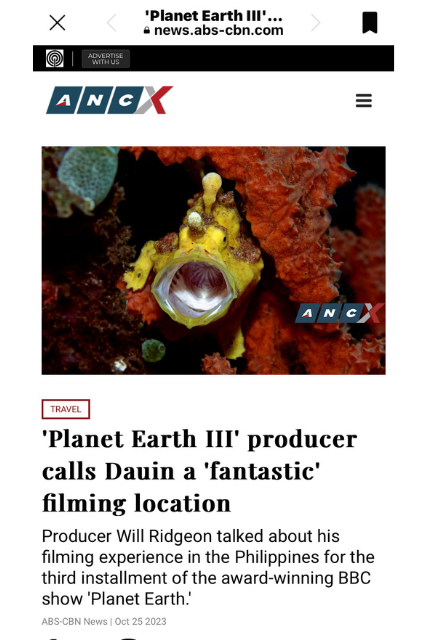
An ANC News feature highlights Dauin, Negros Oriental, as a remarkable filming location for Planet Earth III and its extraordinary marine biodiversity.
For filmmakers, it offers the rare opportunity to capture behaviors that are almost impossible to document elsewhere. For families and curious travelers, it means something equally special: the chance to witness this biodiversity up close, often just minutes from shore. Whether you’re diving, snorkeling, or simply learning about the ocean, every experience here becomes a story worth telling.
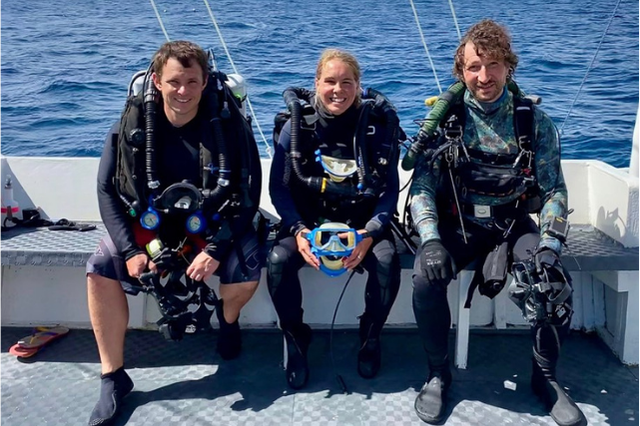
Sam, Yolande and Hugh – the BBC filming team – aboard Atmosphere Resorts’ dive boat Victoria.
A Summer to Remember
As summer approaches, there’s no better time to discover the magic of Dauin for yourself. Imagine exploring the very reef where a BBC crew once spent hundreds of hours filming, or spotting a frogfish hidden in plain sight, the same kind of creature that captured the attention of one of the world’s greatest natural storytellers.
“My lifetime has coincided with the great age of ocean discovery,” said Sir David in an interview. “Over the last one hundred years, scientists and explorers have revealed remarkable new species, epic migrations, and dazzling, more complex ecosystems beyond anything I could have imagined as a young man.” “After almost 100 years on the planet, I now understand the most important place on Earth is not on land, but at sea.”
Sometimes, the most extraordinary encounters don’t happen in distant oceans. They happen right here, just beneath the surface.
And from Atmosphere Resorts & Spa, we wish Sir David Attenborough a very happy birthday!