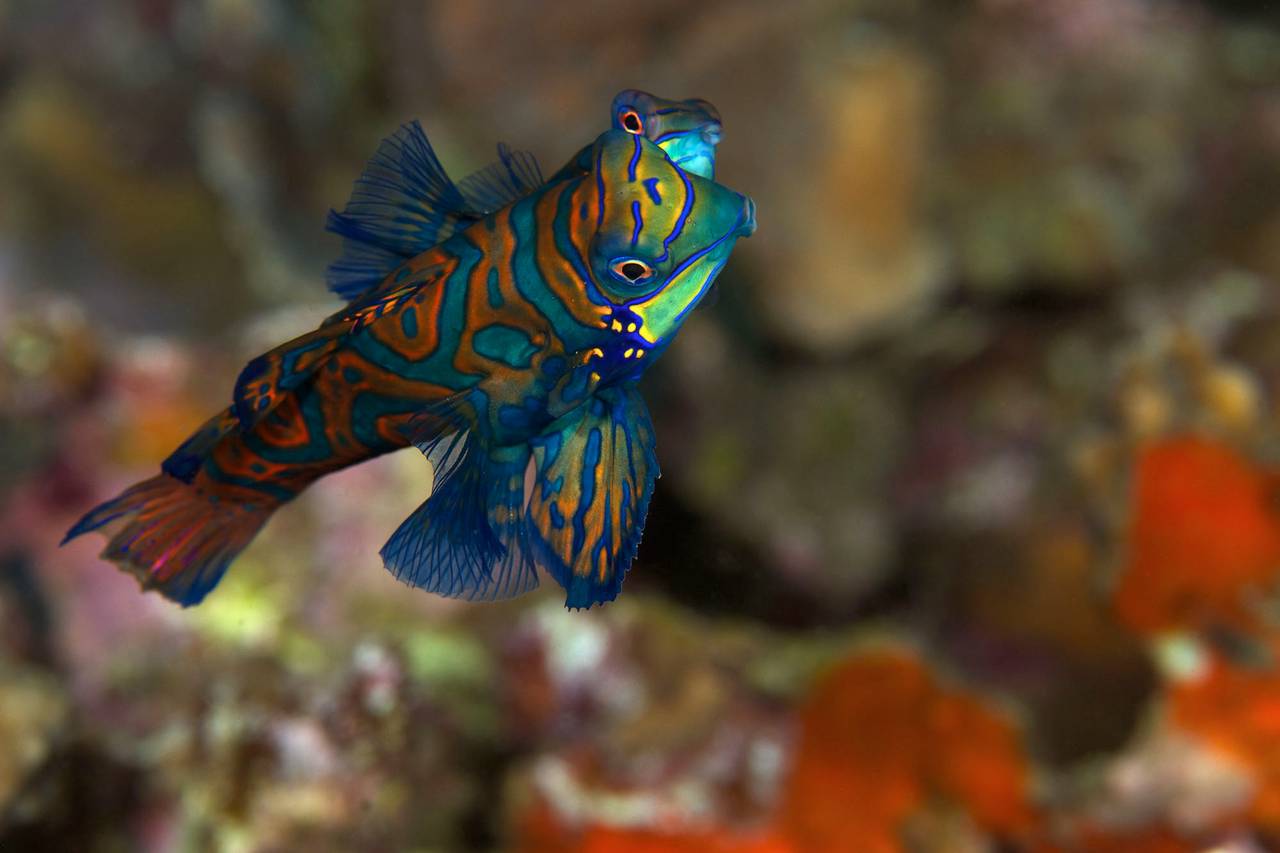

Dauin, nestled along the coastline of Negros Oriental, is known for its world-class muck diving, vibrant coral reefs, and rich marine biodiversity. Mandarin Fish Dives are especially popular here. But as the sun begins to set, one of the ocean’s most captivating rituals unfolds just beneath the surface: the dusk courtship dance of the elusive mandarin fish.
Why is the Mandarin Fish So Special?
As the sun begins to set and paint the water in hues of gold and indigo, the mandarin fish (Synchiropus splendidus) emerges from its coral rubble hideaway to perform one of nature’s most beautiful mating rituals. These tiny, neon-colored fish, no bigger than a couple of inches, engage in a mesmerizing ballet of color and motion, rising in pairs from the reef to briefly hover in perfect synchrony and release their gametes into the water column before disappearing again.
At Atmosphere Dive, we offer guided mandarin fish dives that allow guests to witness this magical moment up close.
With electric blues, vivid oranges, and intricate patterns, the mandarin fish looks like it swam right out of a dream. But it’s not just their looks that make them so special, they also exhibit unique behaviors. Shy and elusive during the day, these fish only reveal their dance in the low light of dusk, making it a rare and privileged sight for divers.
Biology & Ecology
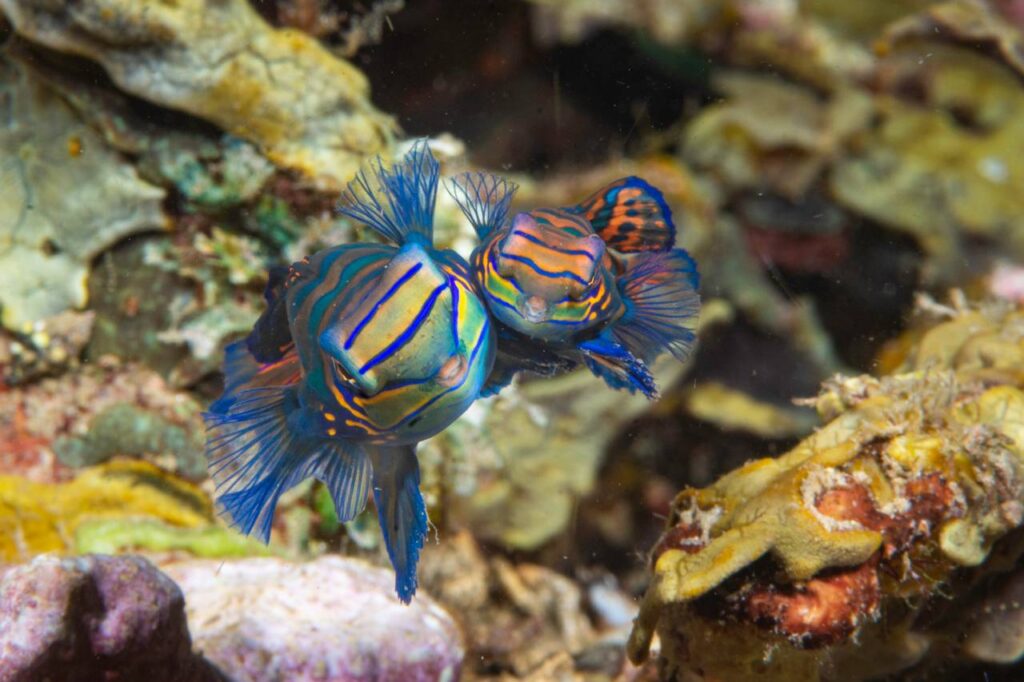
Beyond their kaleidoscopic beauty and enchanting dusk dances, the mandarin fish are fascinating creatures with unique biological and ecological traits that set them apart in the underwater world.
Their name comes from their brilliant hues, reminiscent of the ornate robes worn by ancient Chinese mandarins. Their bodies are adorned with swirling patterns of neon blue, green, orange, and yellow — and yes, they’re just as stunning in real life as they are in photographs.
Mandarin fish belong to the dragonet family, and their vivid coloration is not just for show. It’s also a defense mechanism. Unlike most fish, mandarin fish lack scales. Instead, their skin is covered with a thick, smelly mucus that acts as a barrier against parasites and predators. The pungent coating — combined with their bright warning colors — tells would-be predators to stay away. In the wild, mandarin fish can have a lifespan of 10-20 years.
Habitat & Behavior
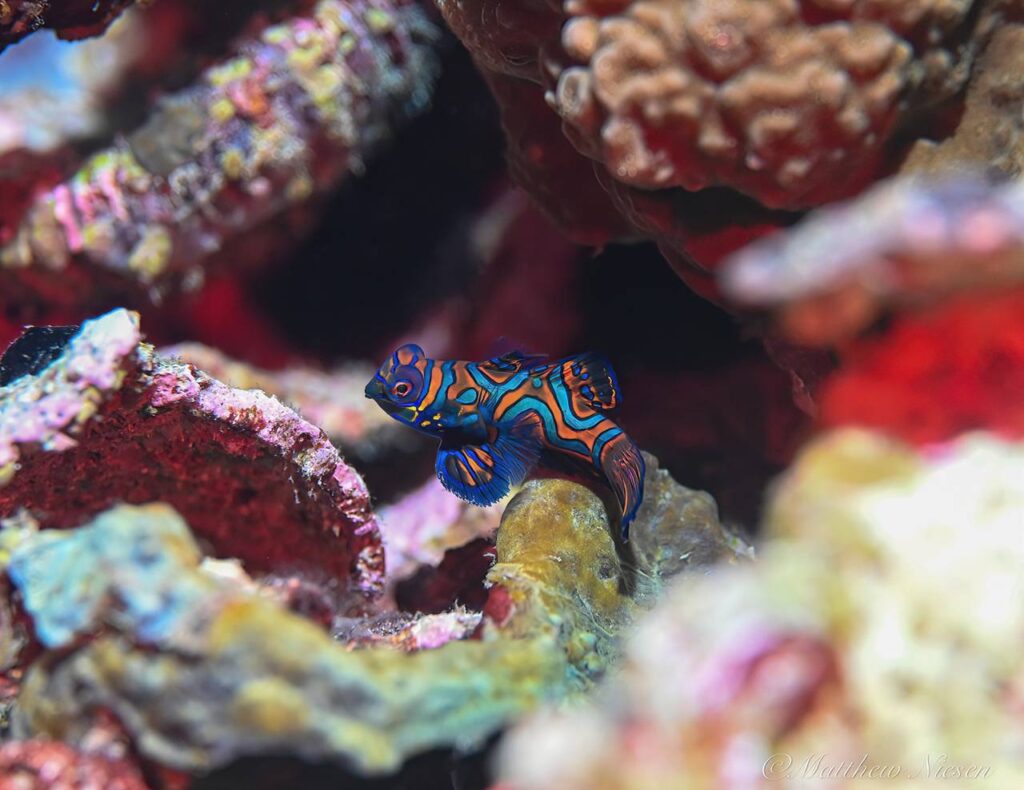
Mandarin fish are found in the warm, sheltered lagoons and coral rubble zones of the western Pacific Ocean, including the Philippines. In Dauin, they thrive in shallow, rubble-strewn reefs, often near branching corals, where they can hide during the day.
These fish are benthic and spend most of their time near the bottom, weaving through coral and rock crevices in search of food. Their diet consists mostly of tiny crustaceans, copepods, and other zooplankton, which they pick off with their small, protruding mouths.
They are most active during the dusk hours, which is when their mating ritual begins and they show off a synchronized, spiraling ascent into the water column that lasts just a few seconds.
Mating & Monogamy
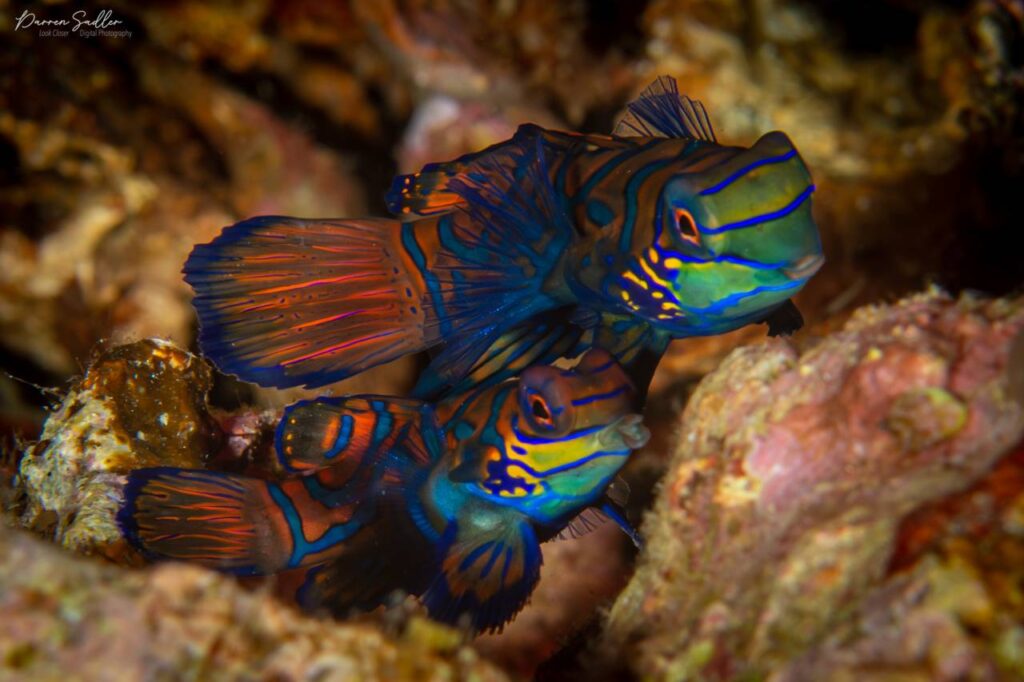
One of the most remarkable aspects of mandarin fish behavior is their mating system. Males will often compete for the attention of females, performing courtship displays that involve flaring fins and showing off their colors. Once a pair is formed, they will rise together in unison during the mating “dance,” releasing eggs and sperm simultaneously before darting back to the reef.
Females typically choose males based on size and coloration, favoring larger, more vibrantly colored individuals, a textbook example of sexual selection in action.
A Fragile Niche
Despite their abundance in some areas, mandarin fish occupy a narrow ecological niche and are vulnerable to habitat destruction. They rely on healthy coral rubble zones and specific microhabitats to hide, feed, and reproduce. Coastal development, pollution, and reef damage can all impact their populations.
Dive with Us
At Atmosphere, our guides know exactly where and when to take you to see this spectacle. The dive is typically shallow, and perfect for photographers or anyone looking to experience something unique and intimate in the underwater world.
We brief all divers thoroughly before entering the water as patience, good buoyancy, and careful observation are key. The dance is delicate, and respectful diving practices are essential to protect both the fish and the reef.
Tips for Divers and Photographers
- Go Slow & Stay Low: Hover quietly and avoid sudden movements.
- Use a Red Light: Standard dive lights can disturb the mandarin fish. Red filters allow you to see them without disrupting their behavior.
- Bring a Macro Lens: These fish are small, and the details matter!
- Be Patient: The magic doesn’t start instantly. Wait, watch, and let the reef come to life.
Ready to witness the mandarin fish dance for yourself? Contact our Dive Centre to book your dusk dive!